Remember that feeling when you first imagined exploring a faraway land—the excitement of discovering new cultures, tasting unfamiliar foods, and seeing landscapes straight from a storybook? That’s the magic we want to capture in your Morocco adventure.
Planning your morocco travel itinerary shouldn’t feel overwhelming. It should be part of the fun. This guide gives you a clear framework to turn your travel dreams into a well-organized, realistic plan.
You’ll learn how to balance your time between bustling cities and peaceful retreats, and how to build a schedule that feels both structured and spontaneous.
The goal is to design an experience that reflects your personal interests. Whether you love history, nature, or local cuisine, your itinerary will highlight what matters most to you.
This approach ensures you make the most of every moment in this diverse country. You’ll return home with memories that last a lifetime.
Key Takeaways
- Create a balanced morocco travel itinerary that combines cities, mountains, and coastal areas
- Build flexibility into your plan so you can enjoy unexpected discoveries
- Match your itinerary to your personal interests and travel style
- Learn to allocate appropriate time for each destination
- Simplify trip planning with clear organizational frameworks
- Design a journey that works for both short getaways and extended explorations
Introduction: Embrace the Magic of Morocco
From the moment you arrive, you’ll find yourself immersed in a sensory experience unlike any other. Morocco captivates with its kaleidoscope of colors, sounds, and aromas.
Located in northwestern Africa, just a short distance from Spain, the country offers incredible diversity. You can explore ancient cities like Marrakech and Fes, then venture into the Sahara Desert or the Atlas Mountains.
Local people welcome visitors with genuine warmth and deep pride in their heritage. Their hospitality makes every interaction meaningful and memorable.
Morocco’s position as a cultural crossroads creates a fascinating blend you won’t find anywhere else. You’ll discover serene riads hidden behind bustling medina walls and peaceful mountain villages only a few hours from cosmopolitan centers.
This journey engages all your senses and creates lasting memories. The contrast between ancient traditions and modern vitality makes every day feel like an adventure.
Why Morocco Should Be Your Next Destination
Morocco’s appeal lies in its remarkable blend of ancient traditions and modern accessibility. You’ll find diverse experiences concentrated in a relatively compact area, allowing you to see and do a lot without endless travel days.
The country ranks among the safest destinations in its region. You can wander medieval cities where atmospheric medinas transport you back centuries. The preservation of historic sites creates an authentic, immersive atmosphere.
Visual opportunities abound across the landscape. From blue-washed streets to golden desert dunes, there is always something extraordinary to capture with your camera. Morocco comfortably accommodates every budget and travel style.
Architectural diversity is everywhere, from Islamic palaces and French colonial buildings to Berber kasbahs. Artisans still practice traditional techniques passed down through generations, turning the country into a living museum of craftsmanship.
Your journey will also revolve around food. Moroccan cuisine blends Arab, Berber, and Mediterranean influences, resulting in some of the finest culinary experiences in the world. Each meal becomes its own small adventure.
Understanding the Essence of a Morocco Travel Itinerary
A successful morocco travel itinerary starts with understanding distances and connections between the country’s diverse regions. Your trip framework should be based on realistic transit times between destinations.
Key Components of a Well-Planned Trip
A thoughtful itinerary balances iconic sights with lesser-known gems. You’ll want to allow enough time in each place to really enjoy it, without feeling rushed.
How you move between cities will shape your overall enjoyment. Minimizing backtracking and unnecessary detours gives you more time for discovery.
Tailoring Your Experience to Your Interests
Your personal preferences should guide every decision in your plan. Whether you prefer historical sites, natural landscapes, or culinary experiences, customization is what makes your trip satisfying.
Building flexibility into your morocco travel itinerary allows for spontaneous detours and longer stays in places you love. This approach turns a rigid schedule into a living, breathing adventure.
| Transport Method | Best For | Average Travel Time | Key Considerations |
|---|---|---|---|
| Train | City-to-city comfort | 2–4 hours | Reliable, scenic routes |
| Self-Drive | Flexible exploration | Varies by route | Freedom, access to rural areas |
| Organized Tours | Stress-free travel | Pre-set schedule | Guided, comprehensive |
| Domestic Flights | Long distances | 1–2 hours | Time-saving option |
Best Times to Visit Morocco: Weather and Seasonal Tips
Choosing the right season for your morocco travel itinerary can dramatically shape your experience. Your timing affects the weather, crowd levels, prices, and available activities.
The most comfortable conditions are usually in spring (March–May) and fall (September–November), when temperatures are moderate across most regions.
Spring brings blooming landscapes and pleasant conditions for desert excursions, with fewer tourists than in peak summer.
Fall offers similar advantages, plus harvest-season celebrations and a more relaxed, post-summer atmosphere.
Summer brings intense heat to inland cities and desert areas, while coastal regions remain more comfortable thanks to refreshing ocean breezes.
Winter can be ideal for Sahara tours. Daytime temperatures are generally pleasant, but nights can be very cold.
Regional variations are significant. Coastal cities enjoy a Mediterranean climate, while interior and desert regions experience more extreme highs and lows.
Be sure to factor Ramadan into your planning. Many restaurants close during daylight hours, but the period offers unique cultural insight, especially around sunset and evening meals.
Your travel season will also determine your packing list. Winter requires warm layers for cold nights, while summer demands light clothing, sun protection, and plenty of hydration.
Visa and Entry Requirements: What You Need to Know
Understanding visa and entry requirements for Morocco will help you avoid last-minute complications.
Travelers with passports from the United States, Canada, Australia, New Zealand, or European Union countries enjoy visa-free entry. Citizens of Malaysia, Singapore, and certain Hong Kong passport holders also benefit from this exemption.
Your passport must be valid for at least six months from your planned entry date, which is standard for international travel. Visa-exempt travelers can typically stay for up to 90 days.
If you require a visa, apply well ahead of your trip. Standard processing often takes 5–10 business days. E-visa options can be faster, sometimes approved within 24–72 hours.
Indian citizens and other nationals who need visas can apply through BLS International or the official Moroccan e-visa platform. Tourist visas generally allow stays of around 30 days.
You may be asked to provide proof of accommodation, return flight tickets, and evidence of sufficient funds, either during the visa application or upon arrival.
Proper preparation ensures a smooth, hassle-free arrival.
Planning Your Routes: Transportation Options and Tips
Efficient transportation is crucial for a well-paced morocco travel itinerary. Your choices directly impact how much you can see and how relaxed you feel.
You’ll have several ways to move between cities, each with its own advantages. The right option depends on your budget, schedule, and comfort level. Balancing cost with convenience is key.
Trains, Buses, and Self-Drive Opportunities
Trains provide a comfortable and reliable way to connect major urban centers. Booking through the official Moroccan railways website saves time and reduces stress. Journeys typically take a few hours and are generally punctual.
Buses are a budget-friendly option for reaching smaller towns and less-connected regions. Private companies often offer more comfort than public buses, and you can reserve seats online for popular routes.
Self-driving gives you maximum flexibility. Roads between major cities are generally well-maintained, and a 4×4 is usually unnecessary for standard routes. Driving also lets you stop spontaneously at viewpoints, villages, and roadside cafés.
Domestic Flights and App-Based Taxis
Domestic flights save significant time on longer routes. Airlines like Royal Air Maroc and Air Arabia Maroc connect key cities in under two hours, making them an excellent option for tight itineraries.
App-based taxis (and similar services) provide good value, especially for small groups. They reduce the need for price negotiation and offer convenient door-to-door service in urban areas.
| Transport Method | Best Use Case | Average Trip Time | Key Advantage |
|---|---|---|---|
| Train | City-to-city travel | 2–5 hours | Reliable, scheduled |
| Self-Drive | Flexible exploration | Variable | Complete freedom |
| Domestic Flight | Long distances | 1–2 hours | Time efficiency |
| App Taxis | Urban transport | Under 1 hour | Fixed pricing |
Consider mixing transportation types throughout your morocco travel itinerary. Combining trains, buses, flights, and private transfers can optimize both time and comfort.
Must-See Destinations Across Morocco
From imperial cities to coastal retreats, Morocco offers unforgettable destinations at every turn.
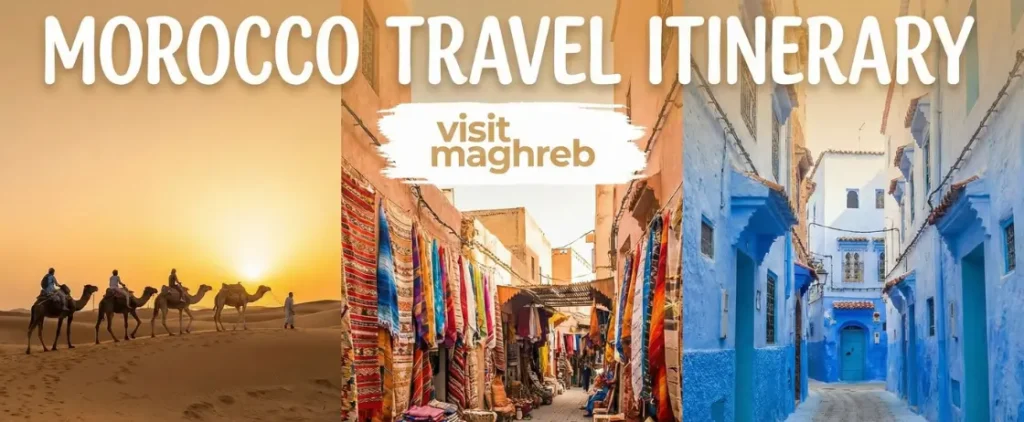
Start in Marrakech, where vibrant souks and magnificent palaces create a powerful sensory experience. Continue on to Fes, the cultural and spiritual capital, famous for its ancient medina and historic university.
Don’t miss Chefchaouen, the enchanting blue town nestled in the Rif Mountains. For a truly memorable highlight, visit the Sahara Desert at Merzouga for camel rides across golden dunes and starlit desert nights.
Coastal cities provide a refreshing contrast to inland adventures. Casablanca blends tradition with modern development, while Essaouira charms with its historic ramparts, Atlantic beaches, and laid-back vibe.
Rabat offers a refined capital experience, and Tangier serves as a fascinating gateway between Europe and Africa.
A stay in the Sahara Desert is often one of the most spectacular parts of a morocco travel itinerary. Visiting this mix of cities, mountains, and coasts will help you capture the full spectrum of what the country offers.
Discovering Marrakech: The Heartbeat of Morocco
Marrakech greets you with an energy that pulses through both its ancient walls and modern avenues. The city blends centuries-old traditions with contemporary creativity.
Local Attractions and Cultural Experiences
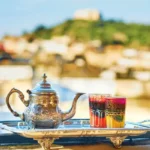
Staying in a traditional riad turns your accommodation into an experience of its own. Many offer personalized service, rooftop terraces, and nightly tea rituals you’ll remember long after you leave.
Plan for at least four days in Marrakech. The extensive souks, museums, gardens, and palaces take more time than most visitors expect.
Highlights include Bahia Palace, with its intricate tilework and lush courtyards filled with orange trees, and the quieter Dar El Bacha museum, which also has a remarkable café known for its coffee.
Navigating the medina is an adventure in itself. You’ll find colorful spice vendors near Place des Ferblantiers and the historic Jewish Quarter (Mellah) close by.
Hone your bargaining skills in Souk Semmarine and surrounding markets. Begin negotiations well below the asking price and treat the process as cultural exchange rather than confrontation.
Structure your days to balance sightseeing and downtime. Visit popular sites like Ben Youssef Madrasa early in the morning, then retreat to your riad or a café during the afternoon heat.
Marrakech’s culinary scene goes far beyond classic tagines. You’ll find everything from traditional street food and vegetarian-friendly spots to modern Moroccan fusion restaurants.
This city rewards those who explore slowly and strategically. Each day peels back another layer of its complex character.
Exploring the Historical Charm of Fes
Fes feels like a living museum, where medieval streets still echo with the traditions of scholarship and craftsmanship. It is Morocco’s intellectual and spiritual heart.
Plan to spend at least two to three days here. The UNESCO-listed medina of Fes el-Bali is the world’s largest car-free urban area, and you’ll need time to move beyond the most touristy streets into quieter, more authentic neighborhoods.
Navigation can be challenging; offline maps are often unreliable in the medina’s maze-like alleys. Hiring a knowledgeable local guide for your first day is highly recommended.
Your visit should include architectural masterpieces such as Al-Attarine Madrasa, with its intricate tilework and ornate woodcarving. The famous tanneries are intense both visually and aromatically, but they offer extraordinary photo opportunities.
Compared to some other cities, Fes often feels more authentic and less commercial. Many souks still cater primarily to locals, offering a deeper glimpse into everyday life.
Fes is also an excellent base for desert excursions or a visit to Chefchaouen. The blue city is about three and a half hours away by road, making it easy to combine in a longer morocco travel itinerary.
Traditional hammam experiences in Fes can be among your most memorable cultural encounters, especially after a long day in the medina.
Visiting Chefchaouen: Morocco’s Iconic Blue City
Chefchaouen cascades down the mountainside in shades of blue, creating a scene that feels almost dreamlike. The town’s relaxed pace and compact size make it especially appealing.
You’ll notice a blend of Berber and Spanish influences in the architecture, language, and local culture. This mix sets Chefchaouen apart from Morocco’s larger cities.
Plan at least one full day to wander the photogenic streets; two days allows time to explore quieter areas and nearby trails.
The town’s intimate scale encourages slow travel. Rather than racing between sights, you’ll spend hours meandering through blue-washed alleyways, finding new angles and details at every turn.
Markets here feature Berber textiles, woven blankets, and artisanal crafts that differ from what you’ll see in Marrakech or Fes.
Beyond photography, you can hike in the surrounding Rif Mountains, visit the Spanish Mosque for panoramic sunset views, and enjoy mint tea on rooftop terraces.
Chefchaouen is roughly three and a half hours from Fes by road and fits nicely between northern or imperial city stops and coastal destinations.
Experiencing the Sahara Desert: Camel Rides and Camps
Riding a camel across the shifting sands of the Sahara is one of the most iconic experiences you can include in your morocco travel itinerary.
Before booking, research ethical tour operators. Look for proper padded saddles rather than bare wooden frames and make sure animals are well cared for, with halters that don’t put pressure on sensitive areas.
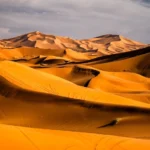
Sunset camel rides are often the highlight. As you move across the dunes, the sand shifts from gold to deep rose, and long shadows transform the landscape.
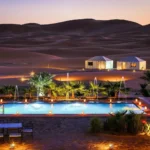
Overnight stays in desert camps immerse you in Berber hospitality. Evenings often include traditional music around a campfire, hearty meals, and the chance to sleep under an astonishing canopy of stars.
Be prepared for large temperature swings. Days can be warm or even hot, while nights may approach freezing, especially in winter. Pack layers, a warm jacket, and proper footwear.
Beyond the classic overnight, the desert offers sandboarding, sunrise walks, and visits to nomadic families who still follow traditional lifestyles.
Sunrise over Erg Chebbi is particularly unforgettable, as the first light gradually reveals wave after wave of golden dunes.
Camps range from simple Berber tents to high-end luxury setups. Both can feel authentic, but comfort levels vary, so choose according to your expectations and budget.
Blending Cities, Mountains, and Coastal Adventures
The most rewarding morocco travel itinerary usually blends urban energy, mountain serenity, and coastal relaxation.
The Atlas Mountains make an excellent addition to a city-focused trip. You can plan day trips from Marrakech or spend a few nights in a mountain village or lodge for cooler air and quieter surroundings.
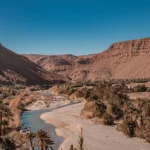
Traditional Berber hospitality, terraced fields, and dramatic valleys give you a completely different perspective on Moroccan life.
Your route might also include Ouarzazate, known as the “Hollywood of Africa,” where film studios have hosted productions ranging from Gladiator to Game of Thrones.
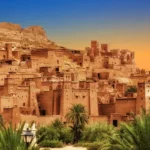
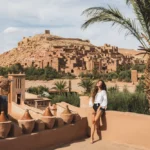
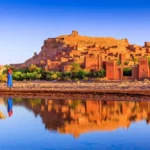
Nearby, the UNESCO-listed ksar of Ait Ben Haddou is a spectacular example of earthen architecture. The winding road across the High Atlas offers sweeping views, turning travel time into part of the adventure.
Plan at least one day on the coast in towns like Essaouira. Its Atlantic breezes, fresh seafood, white-and-blue medina, and relaxed vibe offer the perfect counterpoint to the desert and the big cities.
By combining cities, mountains, desert, and coast in one morocco travel itinerary, you gain a much deeper understanding of the country’s diversity.
Insider Tips for Budget-Friendly Morocco Trips
Smart choices about where you sleep, eat, and how you move can significantly reduce costs without sacrificing experience.
Affordable Accommodations and Riad Stays
Traditional riads often offer better value than standard hotels, especially in cities like Marrakech and Fes. Many include generous breakfasts that can keep you going well into the afternoon.
Budget guesthouses can start around $15–25 per night, while mid-range riads often fall in the $40–70 range, depending on season and location.
Focus on smart spending, not strict deprivation. Save on accommodation and transport where possible, and reserve your splurges for the experiences that matter most to you.
Local Dining and Bargaining Advice
Eating where locals eat is one of the best ways to save money and experience authentic cuisine. Neighborhood cafés and small restaurants often serve filling, vegetarian-friendly meals at very reasonable prices.
Bargaining in souks is expected and can be enjoyable if approached with patience and good humor. Start low, be polite, and don’t be afraid to walk away if prices stay too high.
Carry cash, as many smaller shops and restaurants do not accept cards. Withdraw Moroccan Dirhams (MAD) from ATMs in larger cities to get the best exchange rates.
Traveling with friends or family can reduce per-person transport costs, especially for taxis or private drivers.
With these strategies, your morocco travel itinerary can be both affordable and rich in authentic experiences.
Customizing Your Morocco Itinerary to Match Your Travel Style
Customization is what transforms a standard route into a deeply personal morocco travel itinerary.
You have full freedom to shape your trip around what excites you most. Architecture, adventure sports, local markets, food tours, photography, or wellness—your priorities should dictate your schedule.
Treat sample itineraries as flexible templates rather than strict rules. They’re useful for understanding logistics and travel times, but you can always swap destinations or add extra days where your interests are strongest.
The ideal trip length depends on your available time and preferred pace.
| Trip Duration | Recommended Focus | Key Considerations |
|---|---|---|
| 4–7 days | Single region or 1–2 cities | Deep immersion, minimal transit time |
| 8–10 days | Major cities + 1 highlight | Balanced pace, core experiences |
| 11–14 days | Comprehensive journey | Full diversity, more relaxed schedule |
Consider your energy levels as you plan. Some travelers enjoy changing locations frequently, while others prefer using one city as a base for multiple day trips.
Also factor in seasonality, recent traveler reviews, and local holidays or festivals when finalizing your morocco travel itinerary.
Resource Guide: Recommended Itinerary Samples and Tools
Using practical resources can turn the planning process from stressful into manageable.
You’ll find many sample itineraries ranging from fast-paced 4-day trips to relaxed 2-week journeys. These examples show logical, day-by-day progressions that reduce backtracking and make the most of your time.
- A 4-day itinerary offers a whirlwind introduction focused on one or two major cities, possibly with a short desert taster.
- A 7-day itinerary provides a more balanced experience, with time for guided city tours, a desert overnight, or a coastal stop.
- A 10-day itinerary is often the minimum recommended for a well-paced morocco travel itinerary including Marrakech, Fes, the desert, and possibly Chefchaouen or Essaouira.
- A 2-week itinerary allows you to cover imperial cities, the Sahara, the Atlas Mountains, and the north or coast without feeling rushed.
Desert tours are usually 2–3 days as part of a longer trip, with departures commonly available from both Marrakech and Fes.
Book major services through reputable platforms: the official rail website for trains, well-reviewed operators for desert and city tours, and reliable booking sites for riads and guesthouses. Offline maps and translation apps are also invaluable.
Remember, these sample plans are guides, not rules. Use them as a base, then adapt them to create your own ideal morocco travel itinerary.
Conclusion
With all the essential planning tools at your fingertips, your North African adventure is ready to take shape. You now have a solid framework for creating a thoughtful, realistic, and inspiring morocco travel itinerary.
You’ve gained practical insight into timing, transportation, budgeting, and route planning. Morocco can accommodate any duration and interest, whether you prioritize culture, adventure, relaxation, or a mix of all three.
This journey can go far beyond typical tourism, offering real cultural immersion, stunning landscapes, and unforgettable moments.
Thoughtful preparation doesn’t limit the magic of travel—it enhances it. You’re now ready to design and book a trip that will stay with you for years to come.
FAQ
How many days do I need for a good trip?
For a first-time morocco travel itinerary, 7–10 days is ideal. This allows you to explore key cities like Marrakech and Fes, plus a memorable excursion into the Sahara Desert.
Is it safe to travel around the country?
Yes, Morocco is generally considered safe for tourists. Take normal precautions, such as keeping valuables secure in crowded medinas and using reputable guides or agencies for desert tours.
What is the best way to get from city to city?
Trains are comfortable and reliable for major routes like Casablanca–Rabat–Fes–Marrakech. For more remote areas, including the Atlas Mountains or parts of the desert route, buses or private drivers are excellent options.
What should I pack for the varying climates?
Pack layers. Lightweight clothing is ideal for daytime, but warm layers are essential for cool desert nights and mountain regions. Bring a scarf or shawl for sun protection and modesty when visiting religious sites.
Is a camel trek in the Sahara worth it?
For most travelers, yes. A camel ride to a Berber camp and a night under the stars in the dunes are often the most memorable parts of a morocco travel itinerary.
Can I visit on a tight budget?
Absolutely. Staying in affordable riads or guesthouses, eating at local markets, and using public transport like CTM or Supratours buses can keep costs low while still delivering a rich, authentic experience.
Best Morocco Tours & Day Trips for Your Bucket List
3 days from Marrakech to merzouga
Fes to ifrane and Cedar Forest day trip
Fes to Volubilis and Meknes day trip
Day trip Fes to Chefchaouen
Ouzoud Waterfalls day trip from Marrakech
Ait ben haddou day trip from Marrakech
Essaouira day tour from Marrakech
Merzouga Quad Tour
Overnight camel trek Merzouga
Merzouga 4×4 desert excursion
4 Days tour from Ouarzazate to Merzouga Desert
3 Days desert tour from Ouarzazate to Fes
2 Days Desert tour from Ouarzazate to Fes
4 Day Errachidia to Marrakech Desert Tour
3 Days Desert tour Errachidia to Marrakech
3 Days tour from Errachidia to Merzouga Desert
2 Day Trip Fes to Merzouga Desert
Fes to Marrakech desert tour 2 days
3 Days tour from Fes to Merzouga
Fes to Marrakech Desert tour 3 days
4 Days from Fes to Merzouga Desert
4 Day Desert tour from Fes to Marrakech
5 Days tour from Fes to Marrakech
7 Days Morocco Tour from Fes
8 days Morocco itinerary from Tangier
5 Days Morocco Tour from Tangier
Morocco 6-day trip from Tangier
Morocco itinerary 7 days from Tangier
10 Day Morocco Tour from Tangier
13-day Morocco tour from Tangier
9-day Morocco tour from Marrakech
7 days tour from Marrakech to Fes
2 days from Marrakech to Merzouga
2 Days Marrakech to Fes Tour